
A Slow Travel Guide to Japan: Tokyo, Kyoto, and Seoul Without the Rush
Ten days moving through Tokyo, Kyoto, and Seoul at a pace built for feeling the place, not just seeing it.
Written by Falguni, Fora Travel Advisor & Founder of Tranquil Explorations. I've traveled to over 45 countries on my own dime, funding every trip myself so I can speak honestly about where money — and time — is worth spending. I stayed at the Fairmont Tokyo, Banyan Tree Kyoto, The Okura Tokyo, and Four Seasons Seoul in July 2026, and this is the slow travel itinerary I'd hand a client who wants Japan to feel unhurried, not checked off a list.
Day 1–2: Tokyo — Arrival and the Art of Slowing Down
Tokyo rewards patience more than any efficient checklist ever could. This is slow travel in its purest form: fewer stops, longer mornings, and room to notice what a rushed itinerary skips entirely.
Begin at Senso-ji, Tokyo's oldest temple, in the early morning — ideally before 8am, when the Nakamise-dori approach is still quiet and the incense smoke hangs still over the courtyard. By mid-morning this becomes one of the most crowded spots in the city, but at sunrise it's contemplative and unhurried, exactly the pace this trip is built around.
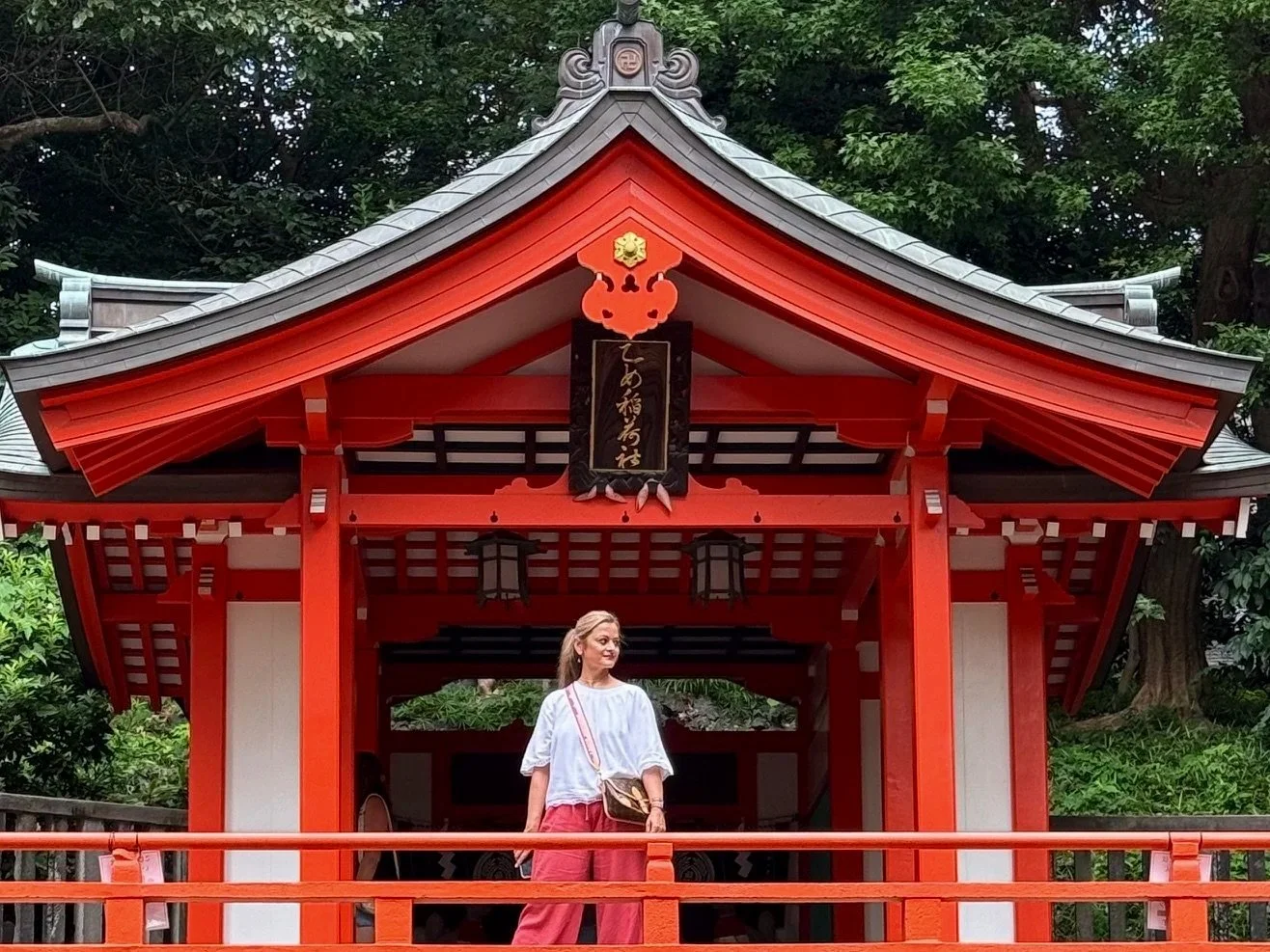
From there, Nezu Shrine is a natural next stop — one of Tokyo's quietest, most photogenic corners. The torii-gate tunnel and pond make it a slow-travel anchor: there's nothing to "do" here except walk slowly and look.
Spend an unhurried afternoon in Yanaka, one of the few Tokyo neighborhoods that survived both the 1923 earthquake and WWII bombings largely intact. Narrow lanes, old wooden shopfronts, a cemetery with more cats than tourists — this is where slow travel in Tokyo actually lives.
End the day at Tsukiji Outer Market, timed for when stalls are unhurried rather than jammed. Don't leave without the matcha soft-serve — it's the kind of small, unhurried pleasure that sums up what slow travel in Tokyo is really about: not the biggest sight, just the best five minutes.
Pro tip: Get a Suica card on arrival. It lets you tap in and out of Tokyo's trains at your own pace, without fumbling for tickets or planning routes in advance — the single best tool for spontaneous, unhurried movement through the city.
Day 3–4: Tokyo — Deeper, Not Faster
Slow travel means resisting the urge to add one more neighborhood. Instead: a full morning at Spark Gallery with nothing scheduled after. An afternoon tea ceremony or long lunch treated as the day's main event, not a filler between sights.
Both The Okura Tokyo and the Fairmont Tokyo are properties built around stillness, gardens, and unhurried service — which matters more to the slow-travel experience than location alone.
In the evening, save an unplanned few hours for Shinjuku — not for dinner reservations or a checklist stop, but simply to walk and let the neon wash over you. Catch the giant 3D cat billboard above the station and wander without a destination. It's the one moment on this itinerary that isn't about stillness — it's about letting Tokyo's energy hit you fully, once, before returning to a slower rhythm in Kyoto.
Day 5–7: Kyoto — Where Slow Travel Was Invented
If Tokyo is where you learn to slow down, Kyoto is where the philosophy fully clicks. The city was built around ritual, seasonality, and unhurried attention — slow travel isn't a trend here, it's the local operating system.
Stay at Banyan Tree Kyoto, set back from the tourist density, with the kind of quiet that lets mornings stretch.
A traditional tea ceremony belongs at the center of any Kyoto itinerary, and for slow travel specifically, it's non-negotiable. The entire ritual — the pacing, the silence, the deliberate movements — is slow travel distilled into a single hour. There's no way to rush a tea ceremony, and that's precisely the point.
Spend a morning through Higashiyama on foot, starting at Yasaka Pagoda — the five-story silhouette that anchors the district's skyline — then up to Kiyomizu-dera, perched on its wooden stage above the hillside. Go early; both sites reward the same golden-hour patience as Senso-ji in Tokyo.
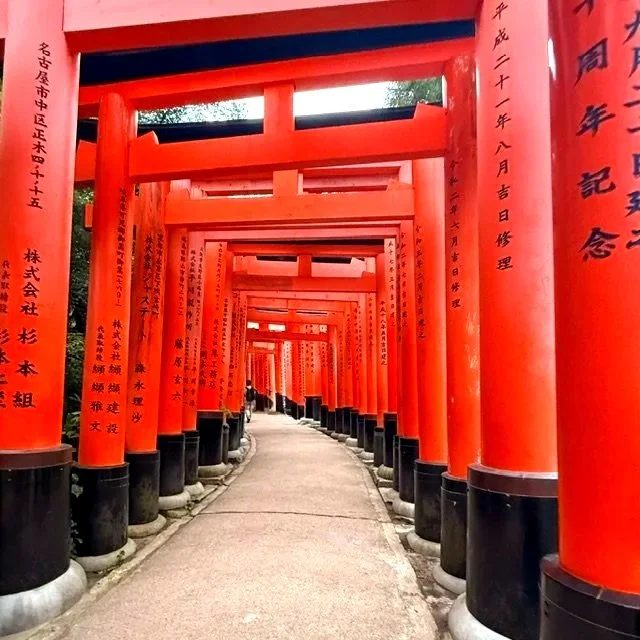
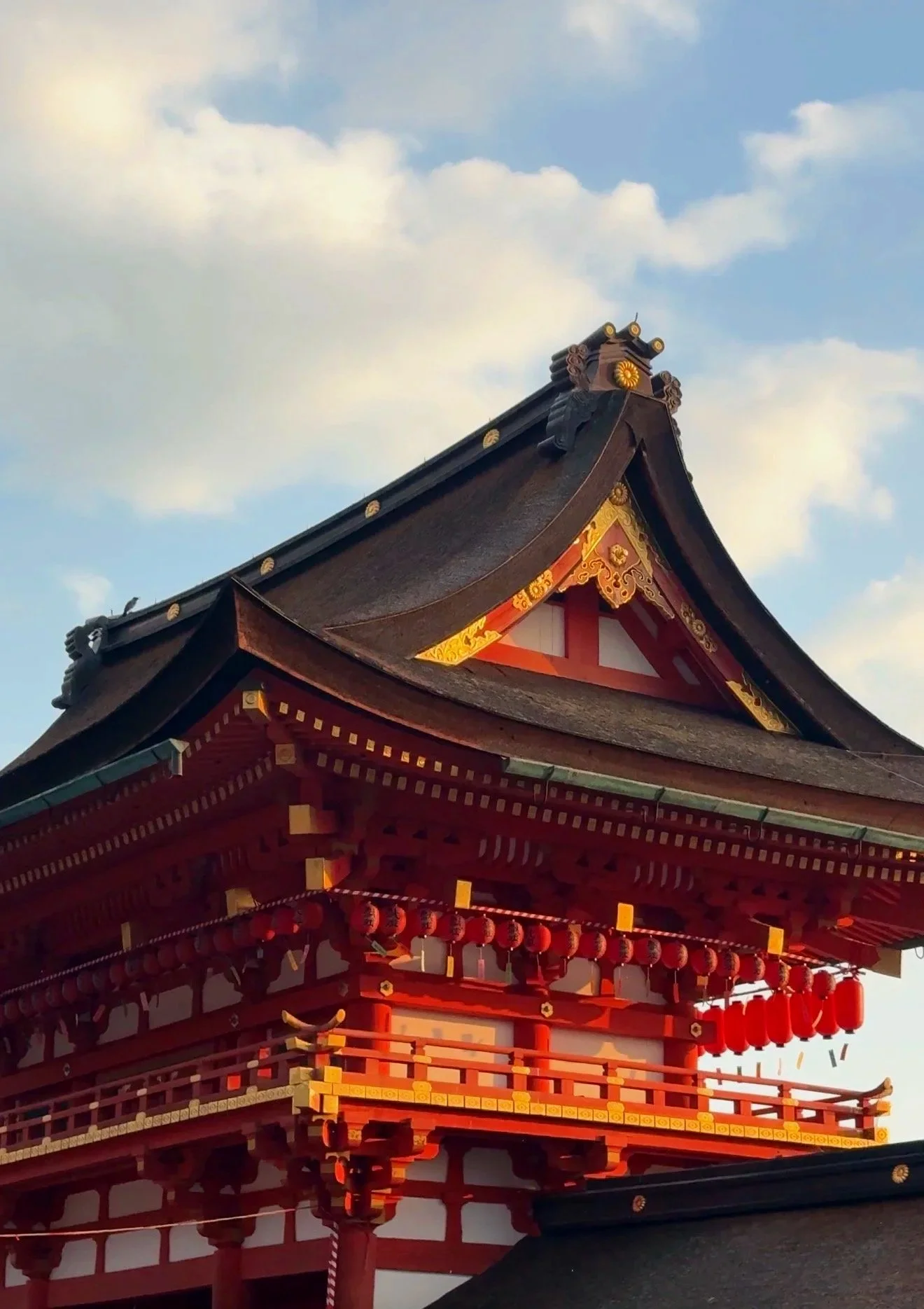
Make the trip to Fushimi Inari Shrine. Most visitors turn back after the first few hundred meters — the real slow-travel reward is walking past that point, through the Senbon Torii, into the quieter stretches of forest where the crowds thin to almost nothing.
Slow travel in Kyoto means one exceptional kaiseki meal rather than three rushed ones, and an entire afternoon left unplanned to wander Higashiyama's stone streets without a destination.
Day 8–10: Seoul — When Slow Travel Means Doing Nothing
Sometimes the most authentic slow travel move isn't a curated list of sights — it's admitting you're tired and staying put. Our stop in Seoul was a 20-hour layover, and after ten days of early mornings in Tokyo and Kyoto, we didn't fight it. We stayed at the Four Seasons Seoul and let the hotel itself be the destination.
Lunch was at Mary, one of the hotel's restaurants, where an Omija cosmopolitan — made with the tart, five-flavor omija berry native to Korea — was the standout of the meal. The next morning's breakfast buffet at Market Kitchen was the real highlight: an enormous spread with virtually endless options, and thanks to Four Seasons Preferred Partner rates, it came complimentary. That's one of the quieter perks of booking through the right consortium access — it turns a layover into something closer to a mini-retreat.
Slow travel isn't only about temple gardens and tea ceremonies. Sometimes it's choosing to do nothing at all, in a beautiful room, because your body has earned the rest. That was Seoul for us — not a checklist, just recovery, done well.
Japan Slow Travel FAQ
What does "slow travel" mean for a Japan itinerary?
Slow travel means fewer stops covered more deeply — one neighborhood instead of three, one temple garden lingered in rather than five photographed quickly. For Japan specifically, it means building unhurried mornings and unscheduled afternoons into the itinerary on purpose, not as a compromise.
How many days do you need for a slow travel trip through Japan?
Ten days is the minimum for genuine slow travel across Tokyo and Kyoto without rushing. Adding Seoul works best at ten to twelve days total so no city feels compressed.
Is slow travel more expensive than a standard Japan itinerary?
Not necessarily — slow travel often costs less per day since you're paying for fewer transfers, fewer bookings, and fewer timed-entry tickets. What it does require is choosing properties built for stillness, such as the Fairmont Tokyo, Banyan Tree Kyoto, and The Okura Tokyo, over ones built purely for location efficiency.
What's the best neighborhood in Tokyo for slow travel?
Yanaka and the area around Nezu Shrine — low tourist density, walkable at an unhurried pace, and largely free of the checklist energy that defines faster Tokyo itineraries.
Where should you stay in Kyoto to avoid feeling rushed?
Choose a property set back from the Higashiyama tourist core — Banyan Tree Kyoto is a good example. Prioritize depth over volume: one tea ceremony, one early-morning walk through Yasaka Pagoda and Kiyomizu-dera, and enough time at Fushimi Inari to walk past the crowded entrance into the quieter Senbon Torii stretch.
Is it okay to spend a Seoul layover just resting instead of sightseeing?
Yes — and for a slow travel trip, it's often the better choice. After ten days of early mornings in Tokyo and Kyoto, a 20-hour layover is better spent recovering than rushing through a compressed sightseeing list. The Four Seasons Seoul, with a good breakfast and an unhurried lunch, turns a layover into genuine rest.
When is the best time to visit Japan for a slow travel trip?
Late spring and early autumn offer the most forgiving weather for unhurried walking days. Summer travel — such as July — works well for slow travel specifically because lower tourist volume in neighborhoods like Yanaka makes lingering easier.
Planning a slow travel trip to Japan? Contact me — Japan is one of my core specialties, and I've stayed at each property in this guide myself.